What roll forming is
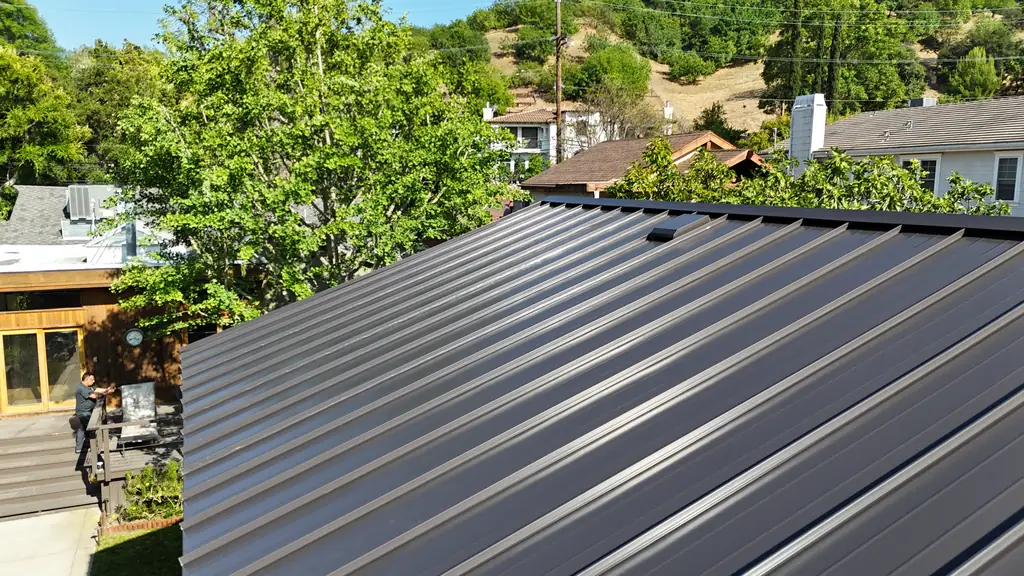
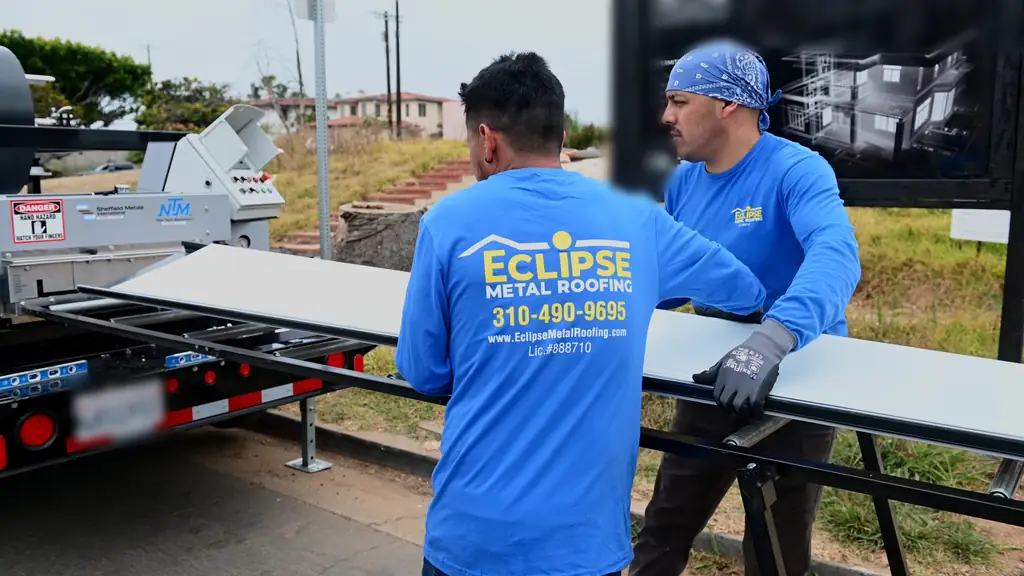
Standing seam panels start as a coil: a long sheet of painted steel or aluminum wound into a roll. A roll former pulls that sheet through a line of shaped rollers. Each station bends the edges a little more, until the metal leaves the machine with the flat pan and raised legs of a standing seam panel. A shear at the end cuts the panel to the length you set.
Many roofers buy panels already formed and cut from a supplier. That works, but it puts the lengths, the schedule and any reorders in someone else's hands. We run our own roll former, so those decisions stay with the crew that measured your roof.
Why it matters on your roof
Panels cut to every run
Every slope on a house has its own length. Forming in house means each panel is cut to the run it covers, from eave to ridge. On long slopes that avoids end laps, the overlapping joints that are one more place for water to work its way in.
One coil, one color
Painted metal can vary slightly between production runs. When the panels for a roof come off the same coils, formed for that job, the color reads evenly across every plane.
Fixes on the same day
Field conditions change. A wall is out of square, a skylight moves, a panel gets dinged during handling. With our own machine we can form a replacement panel instead of waiting on a reorder.
Less waste
Ordering stock lengths means cutting panels down and throwing away the offcuts. Forming to length cuts that waste.
Roll forming at the shop and at the house
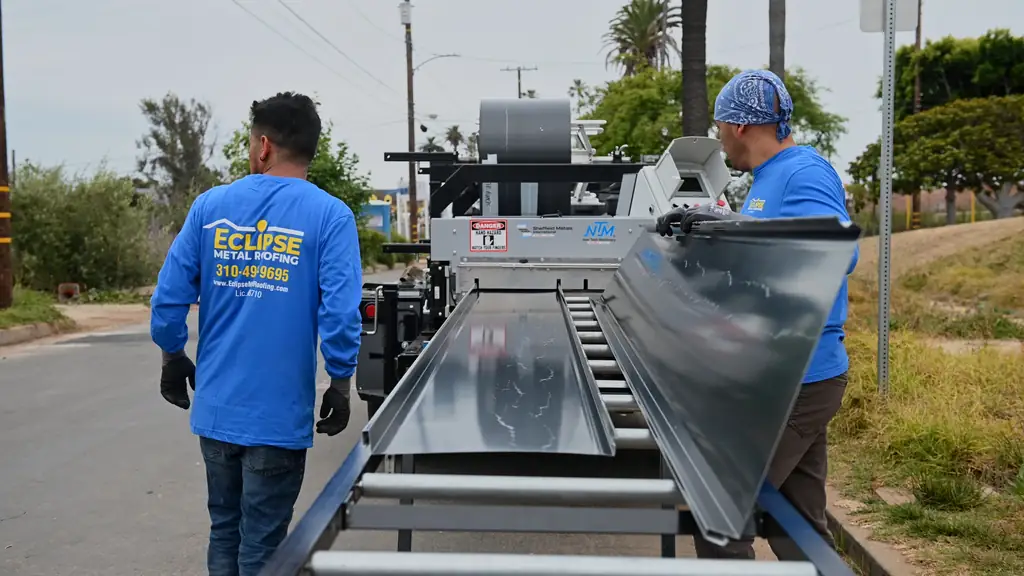
Our metal work runs out of our shop in Van Nuys, where we bend trim and flashings. Our roll former can also be set up near the job when access allows, so long panels are formed close to where they will be installed and travel the shortest possible distance before they are lifted onto the roof. Whether panels are formed at the shop or at the house depends on the length of the runs, the street and the space available. We decide that at the site visit and tell you in the scope.
What we form, and what we do not change
Roll forming shapes the panel. It does not change the metal or the paint, which come from the coil. That is why the scope still names the metal, the gauge and the finish system, and why you should ask any contractor about them. Our guide on how to hire a standing seam contractor covers those questions.
We also bend the trim that finishes a standing seam roof: drip edge, rake trim, ridge and hip caps, valley flashings, and the wall and chimney flashings that keep water out at transitions. Bending those pieces in house means they are made to fit your roof rather than adapted from a stock part.
Questions to ask about roll forming
- Do you form your own panels, or buy them pre-cut?
- If you buy them, how are lengths confirmed, and how long does a reorder take?
- Will any slope on my roof need an end lap?
- Which coil, metal, gauge and finish will my panels come from?
- Who runs the machine, and are they the same people who install the roof?
Our answers: we form our own, cut to every run; we plan long panels around access; and our own crew runs the machine and installs the roof. Call (424) 404-8671 to talk through your roof, or read more about us as a standing seam contractor in Los Angeles.