Why "near me" matters for a standing seam roof
Most people add "near me" to a search because they want a contractor who can actually show up. With standing seam, being local matters for a few more reasons than convenience.
- The roof has to be measured in person. Standing seam panels are formed to the length of each run. A drone photo or a satellite measurement is a good start for a rough idea, but panel lengths, pitch changes, wall heights and flashing details are confirmed on the roof.
- Panels travel as long, flexible sheets. A 30 foot panel needs a crew and a plan to get it from the truck to the roof. A contractor who works locally knows the narrow hillside streets, tight side yards and parking rules that shape how a job is staged.
- Permits and inspections are local. In the City of Los Angeles, reroofing generally goes through the Department of Building and Safety, and other cities in the county run their own building departments. A local contractor knows which office will inspect your roof.
- Service after the install. If something needs attention after a storm, you want a crew that can come back without a long drive or a new contract.
What a standing seam roofer should be able to show you
Plenty of roofers list "metal roofing" among a dozen services. A roofer who specializes in standing seam should be able to show you more than a line on a website.
Their own finished work
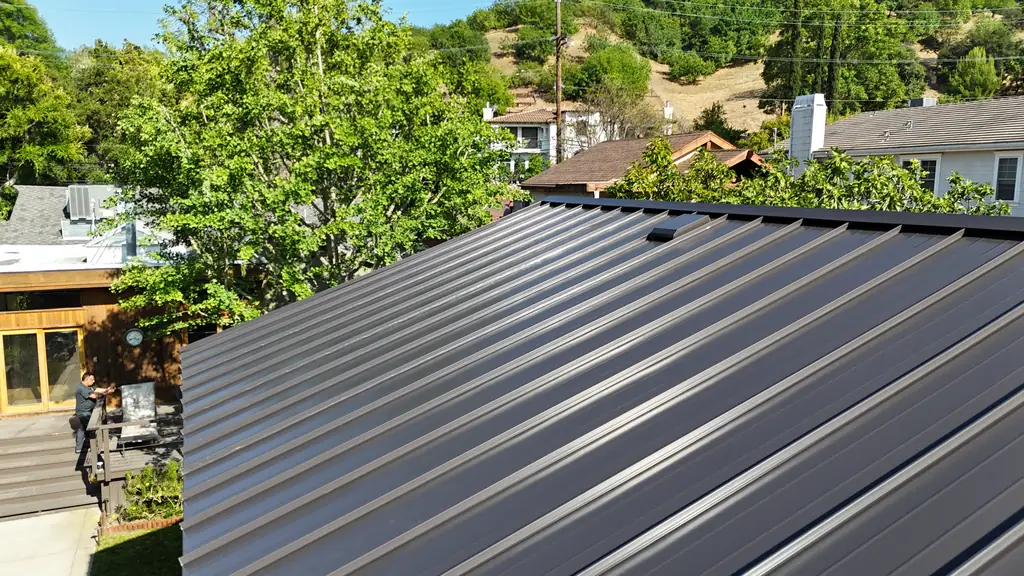
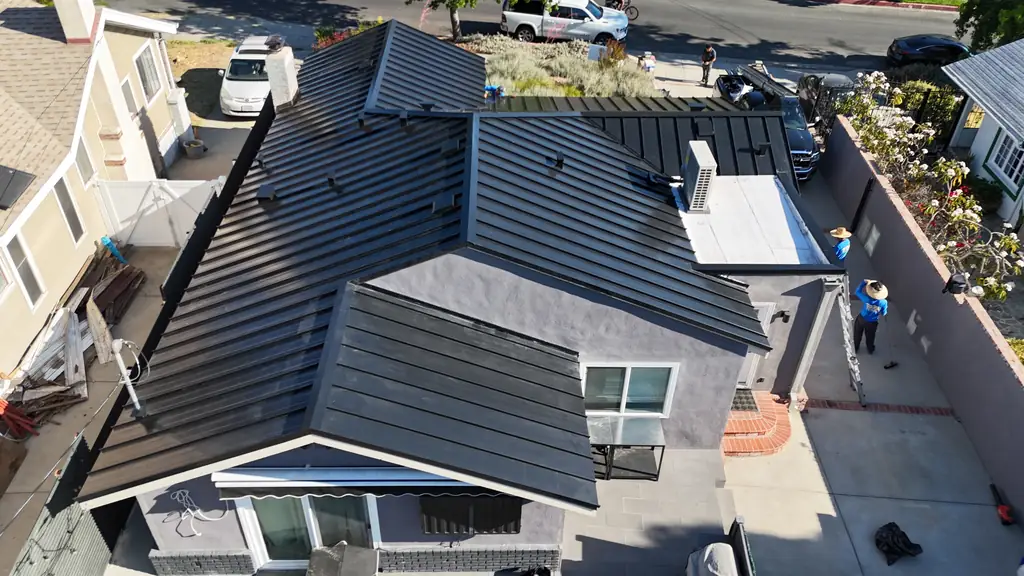
Ask for photos of standing seam roofs they installed, not stock images or manufacturer brochures. Look at the details: straight seams, clean ridge caps, tidy flashings where the roof meets a wall or a chimney, and panels that run unbroken from eave to ridge on long slopes.
The right license
In California a roofing contractor needs a license from the Contractors State License Board. The C-39 classification covers roofing. C-43 covers sheet metal, which is useful for the trim and flashings that standing seam depends on. Eclipse Remodeling & Roofing Inc holds both, under license #888710.
A crew that does this every week
Seaming tools, clip layouts and panel handling are skills. A crew that installs standing seam regularly will move faster, make fewer field cuts and leave cleaner details than a crew that does one metal roof a year.
How our site visits work
When you call, we ask a few simple questions: the address, what is on the roof now, roughly how big the house is, and what you have in mind. If the job is a fit, we set a time to come out.
At the visit we measure every plane of the roof, note the pitch, and look at the details that change a standing seam job: valleys, hips, skylights, chimneys, walls that the roof meets, and the condition of the existing roof. We also look at access, because it decides how panels get from the roll former to the roof.
After the visit you get a written scope. It names the panel profile, the metal and its thickness, the finish and color, the underlayment, how the old roof comes off, the flashings and trim, and who pulls the permit. If anything is unclear, ask, and we will explain it in plain language.
No pricing on this page, on purpose. A price quoted without seeing the roof is a guess. We would rather look first and give you a number we can stand behind.
What happens on install days
On a replacement, the crew removes the old roof down to the deck, and we check the deck for damage before anything new goes on. Any repairs are discussed with you before the work is done. New underlayment goes down, then the edge trim, then the panels, working across the roof. Flashings are bent to fit and installed as the panels go on, not added at the end.
Because we form the panels ourselves, we can run panels to the length of each slope and form extra if a field condition changes. When the roof is done, we clean up, and we walk the finished roof with you so you can see the seams, the ridge and every flashing for yourself.
Who we are
Standing Seam Contractor is operated by Eclipse Remodeling & Roofing Inc, dba Eclipse Metal Roofing. The company has worked on Los Angeles homes since 2006, works on residential roofs only, and never hands its roofs to subcontractors. You can read more about our crew, or call (424) 404-8671 to set up a visit.
Questions to ask any roofer near you
- Is your license active, and does it include C-39 roofing?
- Who will be on my roof, your employees or a subcontractor?
- Who forms the panels, and will long runs go on as single panels?
- What panel profile, metal thickness and finish are you proposing, and why?
- Who pulls the permit, and who meets the inspector?
- What happens if you find damaged decking during tear-off?
We go through each of these in detail, with the answers you should hear, in our guide on how to hire a standing seam contractor. Ask us every one of them too.